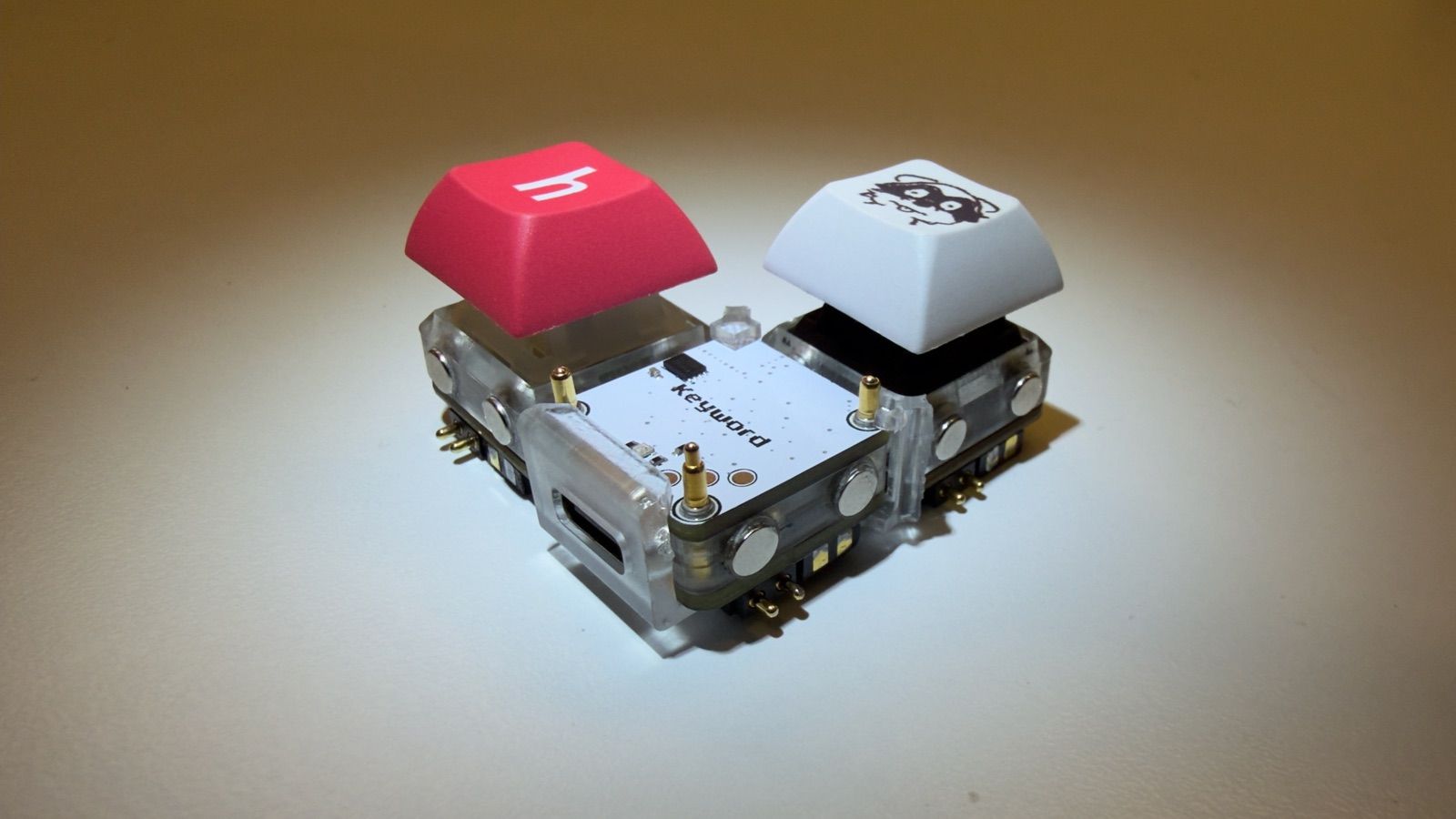
A new project called Keybytes is taking keyboard customization to its logical extreme: a 'truly modular' keyboard assembled like a Lego set, where users can add as many keys as they like.
The design, covered by TechRadar, rests on two ideas. First, magnetic key modules — individual keys that snap together physically rather than mounting onto a fixed PCB, so the layout isn't dictated by a manufacturer's board shape. Second, individual microcontrollers in the modules themselves, which is what makes arbitrary configurations electrically possible. Instead of one controller managing a fixed key matrix, the intelligence is distributed across the keys.
That architecture is the interesting part for the custom-keyboard crowd. Conventional 'modular' keyboards usually mean hot-swappable switches or detachable numpads — the geometry is still fixed. A per-key-controller design removes that constraint entirely: a macro pad can grow into a 60%, a 60% into a full-size, or into something with no standard name at all, one magnetic module at a time.
The obvious open questions are the practical ones — latency and polling across a daisy-chained magnetic bus, per-key cost when every cap carries its own silicon, and firmware complexity. But as a direction, Keybytes points at where the enthusiast market has been heading for years: away from buying a layout, and toward composing one.
Discussion 0
Join the debate — sign in to comment.
Sign inNo comments yet — start the debate.